


Overview
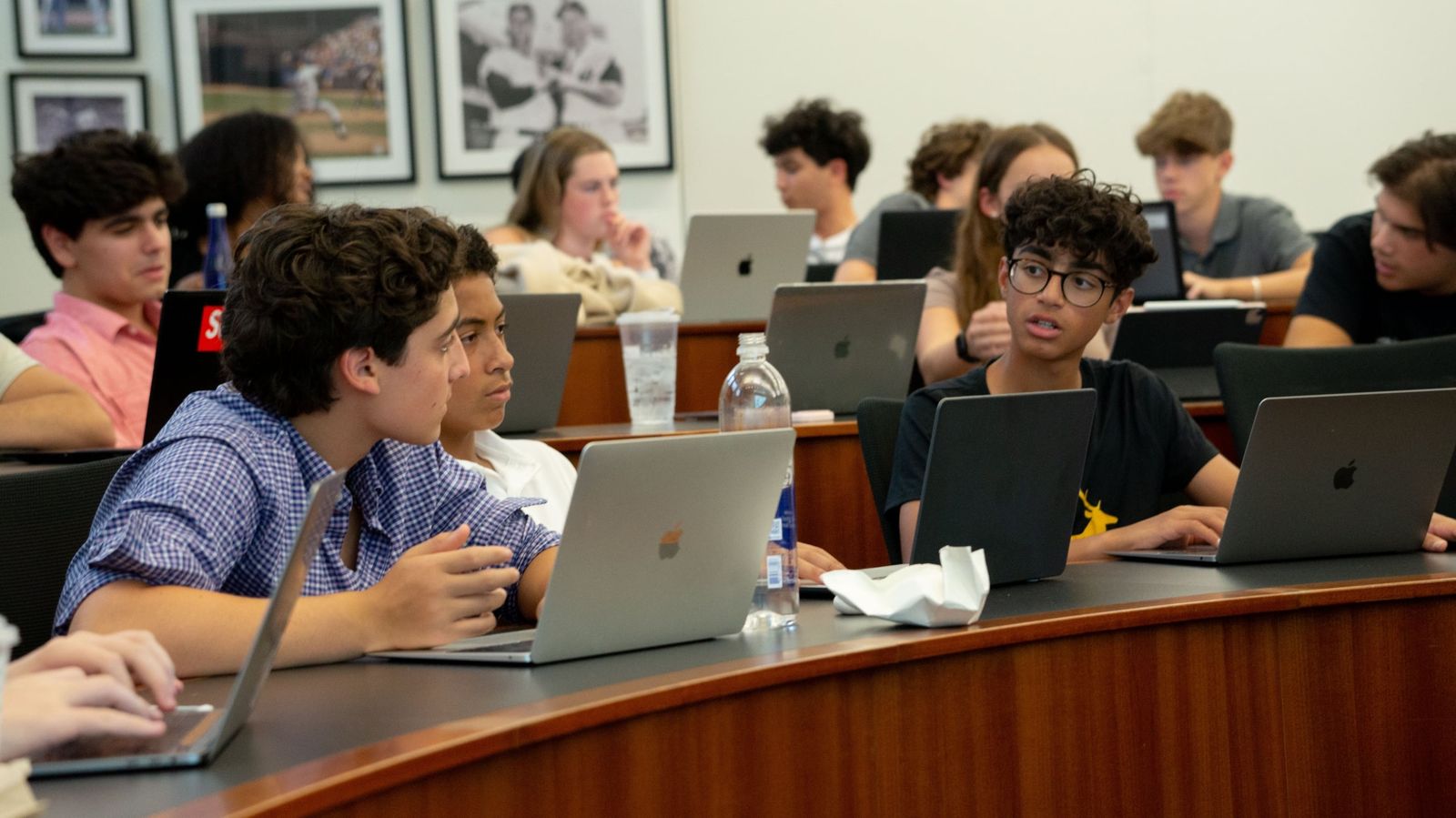
The day-student (commuter) version of the 7-day Wall Street program, for teens whose family is already staying in New York. Your child joins the residential students for five weekdays, from about 9:30 am to 4:30 pm, for classes taught by New York Institute of Finance instructors, team projects, guest speakers and the week's team competition.
The two weeks cover different material: Jul 12–16 is week 1 of the full curriculum (how Wall Street works, investing, private equity and venture capital, portfolios and financial statements, with a stock-picking competition); Jul 19–23 is week 2 (fintech and crypto, technical analysis, behavioural finance and career paths, with a model-portfolio competition).
Not included: accommodation, meals (lunch is not included), and the city highlights, dinners and evening activities after 4:30. It's an honest option only if your family is in New York anyway — a teen travelling from Europe on their own needs the residential program.
What's included
The itinerary
- Jul 12–16 Week 1 of the curriculum (Mon–Fri) — Finance classes with New York Institute of Finance instructors: what Wall Street is and how it works, building your "financial quotient", private equity and venture capital, investment and hedge funds, wealth management and building a portfolio, diversification, and the key ideas behind financial statements and DCF valuation. A careers panel with an HR professional from a large company covers the skills recruiters look for, interview technique and personal branding on LinkedIn. The week's team challenge is the Fund Manager Competition: each team screens around ten companies, picks a portfolio of up to three stocks and pitches it to NYIF experts and the group.
- Jul 19–23 Week 2 of the curriculum (Mon–Fri) — The second week moves on to fintech and digital assets (cryptocurrency and blockchain), the future of finance, technical analysis and market indicators, diversification strategies, behavioural finance, a communication-skills workshop for finance careers, and an NYIF session on career paths across the industry. The team challenge is the Model Equity Portfolio Competition: teams read momentum, trend, volume and sentiment indicators, build a model portfolio from them and present their analysis to NYIF experts.
Meals
No meals are included for day students, and lunch isn't either: your child brings a packed lunch or money to buy one nearby. Breakfast and dinner are at home.
More photos
Frequently asked questions
Who is the day-student option for?
Only for teens whose family is already staying in New York for the dates — for example living or working there for the summer, or staying with relatives. There is no accommodation, no meals and no supervision outside class hours, so it doesn't work for a teen travelling from Europe on their own. For that, the residential version is the right choice — we're happy to compare the two with you.
What are the daily hours, and what's included?
Day students join on weekdays from about 9:30 am to 4:30 pm: Jul 12–16 or Jul 19–23, Monday to Friday — the two weeks teach different material. That covers the morning finance classes and the afternoon team projects, guest speakers and modules, together with the residential students. The late-afternoon city highlights, dinners, evening activities and weekends happen outside those hours and aren't part of the day-student option. Lunch is not included either.
Where does my child go each morning, and who looks after them?
The operator confirms the meeting point and the drop-off and pick-up arrangements after enrolment — we'll pass them on as soon as we have them. During program hours your child is with the group and its staff; getting there and back each day, the lunch money and everything before 9:30 and after 4:30 is up to the family. Please tell us if you need anything specific (for example an earlier drop-off) and we'll ask.
Which departure is right for my child?
This program is for teens in grades 9–12 (roughly ages 14–18), and the sheet and the operator's website agree on that. Dates: Jul 12–16 or Jul 19–23, weekdays only. The grade is the one your child is in during the 2026–27 school year — we'll help you match it to your school system. Dates are the operator's official start and end dates.
Who teaches the classes?
Instructors from the New York Institute of Finance — founded by the New York Stock Exchange in 1922 and today a training provider for banks, regulators and finance professionals worldwide. The teaching team are people with long careers on Wall Street (trading, asset management, banking, risk). The exact instructors for 2027 are confirmed in the spring.
Does my child need to know anything about finance already?
No — there are no prerequisites, and the program is designed for complete beginners as well as teens who already follow the markets. Before arrival, participants get free access to two short online lessons on the NYIF learning portal (basic macro- and microeconomics) and a live webinar on presenting and pitching. They're optional, but helpful for a teen who is new to the subject — and a good English warm-up.
What exactly is included in the price?
The classes and program activities during the day-student hours. Not included: accommodation, any meals (lunch included), the evening and weekend program, transport to and from the daily meeting point, the operator's application fee and travel insurance.
Is there a discount for enrolling early?
The operator currently gives an early-enrolment discount on its programs (US$100 on the other day-student options). We couldn't see the amount for this one yet — ask us and we'll check before you decide. The price shown on this page is the full tuition.
Does my child get a certificate?
Residential students receive a certificate from the operator and NYIF; we'll confirm with the operator that day students get the same.
Does my child need a visa or an ESTA?
Only for your family's own trip to the US — the day program itself needs nothing extra. Teens with a passport from most EU countries travel on an approved ESTA (the online US travel authorisation); a B-2 visitor visa, not a student visa, is the route for other passports — ask us.
How good does my child's English need to be?
A solid intermediate level — the operator recommends B1 or above for its career programs, because the classes, case studies, team projects and presentations all happen in English. Your child can ask for an English-speaking roommate, and one-to-one English conversation time with a staff member can be arranged daily or a few times a week.
Are phones allowed?
Yes. Teens can bring their phone, so you can call or message them directly. The operator also runs a communication centre that's staffed every day of the summer, with someone on call around the clock for emergencies.