

Overview
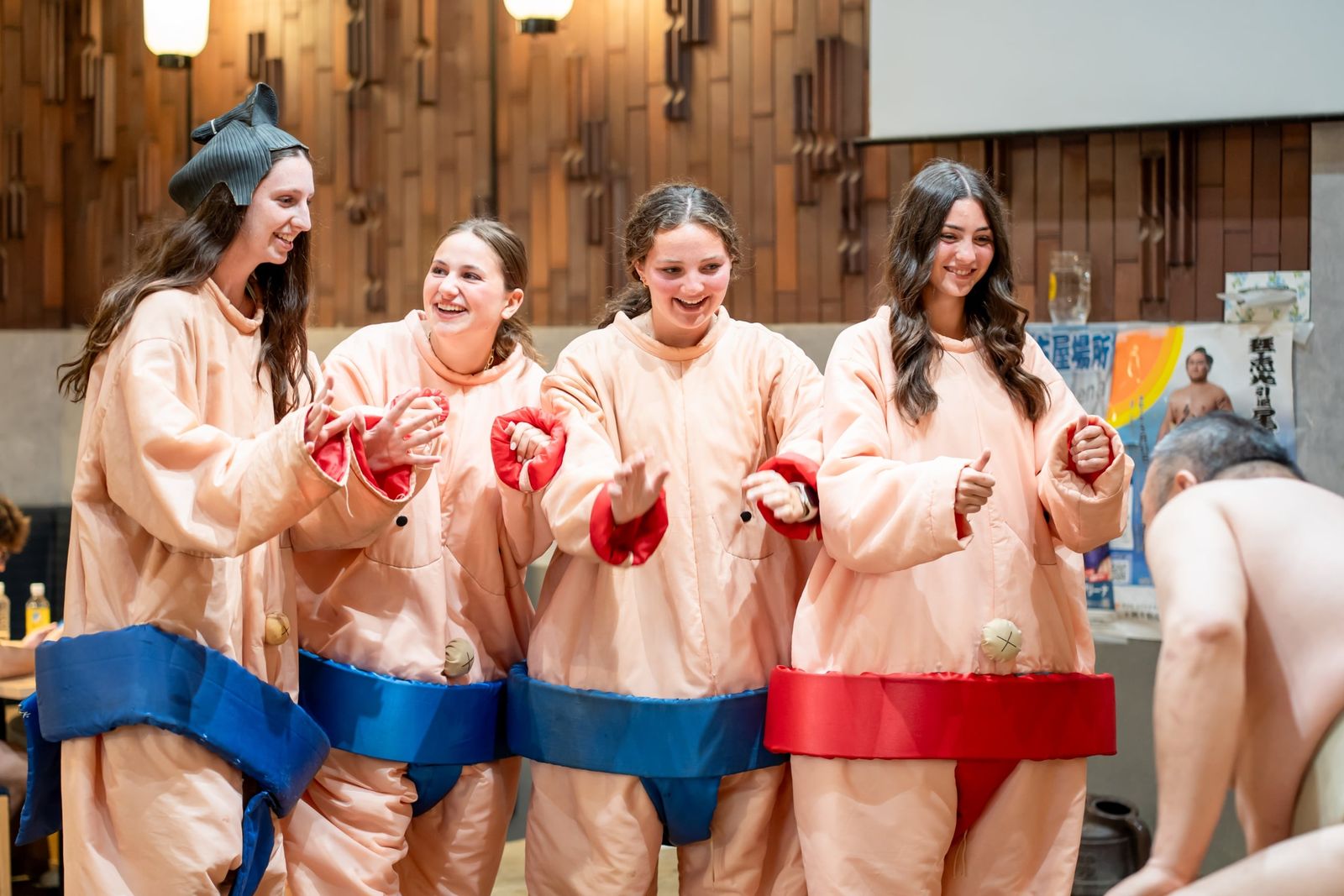
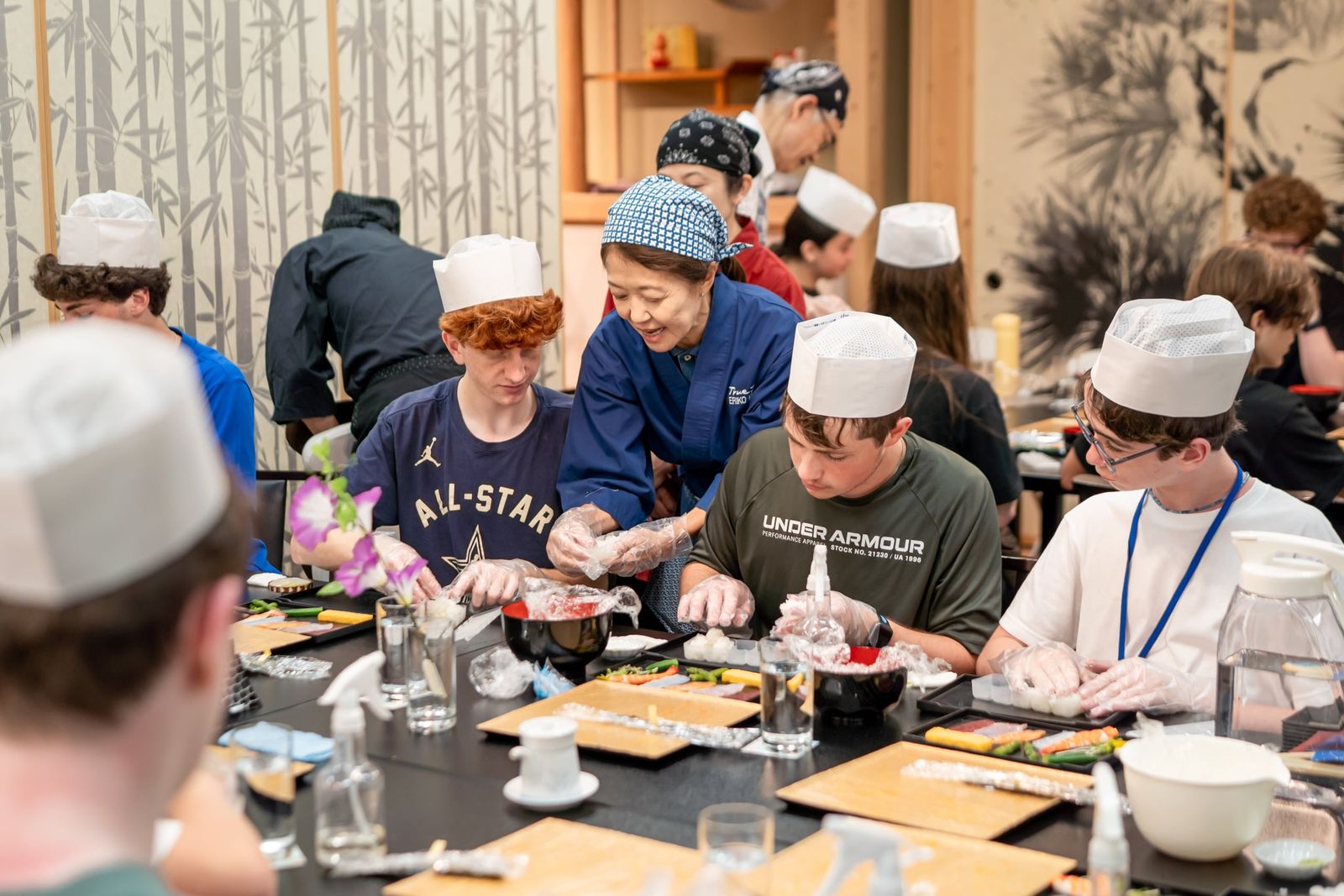
A Japan journey for a small group of up to 26 teens, mixing old and new. It starts in Tokyo with the Tsukiji fish market, Shibuya Crossing, a sushi-making class with professional chefs, a sumo session and teamLab's digital art, with a day out to Hakone for views of Mt Fuji.
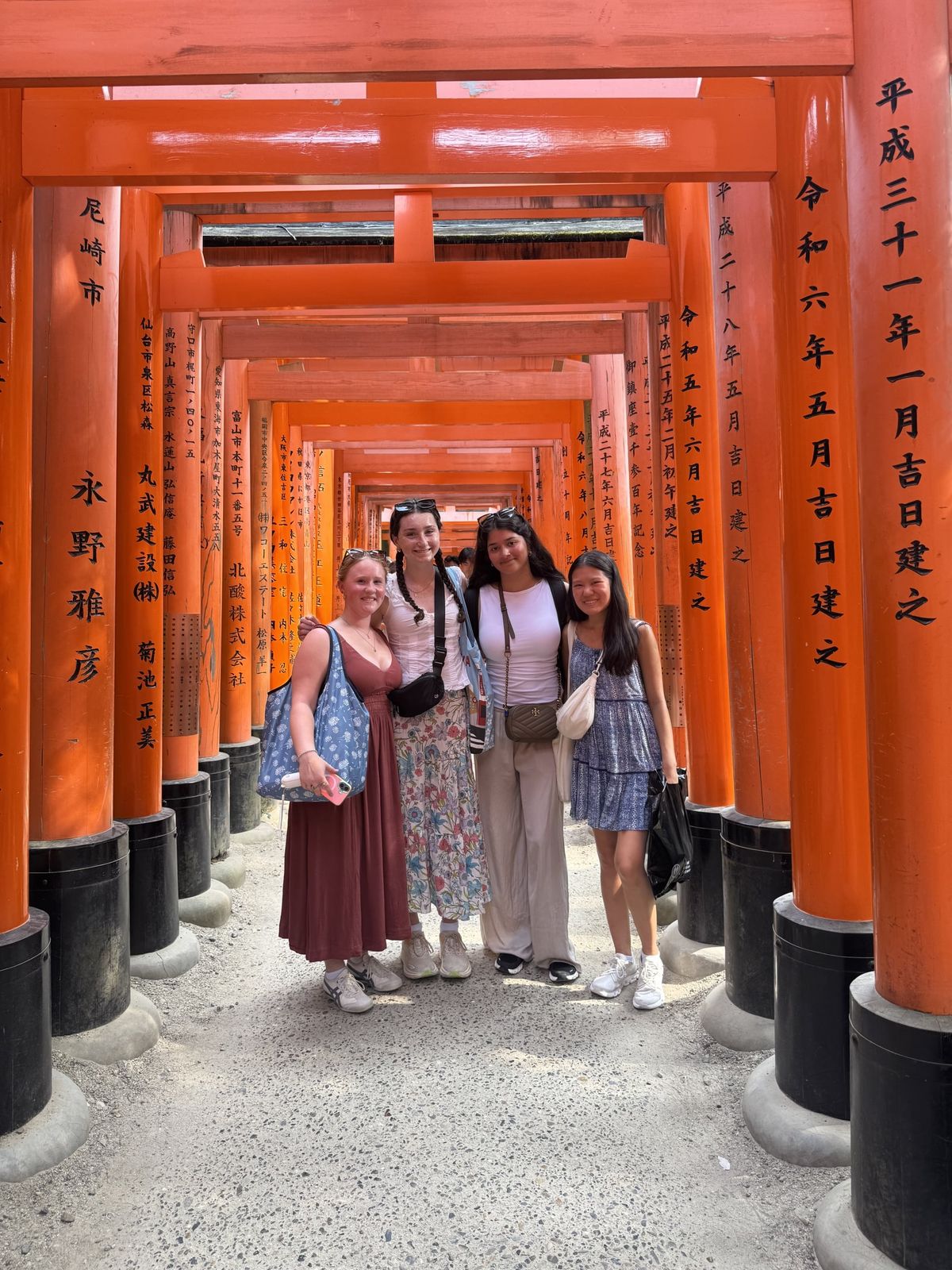
A bullet train takes the group to Kyoto for a meditation class with a Zen Buddhist monk, the thousands of red gates at Fushimi Inari and the Arashiyama bamboo forest, with day trips to Nara's giant Buddha and deer park and to Lake Biwa for dragon-boating and kayaking. Further south come whitewater rafting on the Kuma River and a guided visit to Hiroshima's Peace Memorial Park and the island of Miyajima, before a last stretch in Tokyo with a day at DisneySea and a farewell banquet.
The group travels by private coach, metro, bullet train and ferry, with a professional local guide alongside the leaders. On this trip the operator books the flights too (charged on top of the tuition) — see the flights FAQ. This is the Japan part of the 26-day Japan & Thailand trip, and on some dates the two groups travel together until day 17.
What's included
The itinerary
- Day 1 Flight to Tokyo — An overnight flight across the International Date Line — the group 'loses' a day here and gets it back on the way home. Icebreakers start on arrival.
- Days 2–6 Tokyo & Hakone — A first group dinner and an introduction to Japanese customs and language, the Tsukiji fish market, Shibuya Crossing, a sushi-making class with professional chefs, a sumo session, Asakusa and Sensō-ji temple, a café staffed by humanoid robots and teamLab's digital art. A day out to Hakone for views of Mt Fuji from Hakone Shrine and the Narusawa Ice Cave.
- Days 7–11 Kyoto, Nara & Lake Biwa — Bullet train to Kyoto. A meditation class with a Zen Buddhist monk, the red torii gates of Fushimi Inari, the Arashiyama bamboo forest and Kyoto's historic districts. A day in Nara for Tōdai-ji's giant Buddha and the deer of Nara Park, and an eco-tour on Lake Biwa with dragon-boating and kayaking.
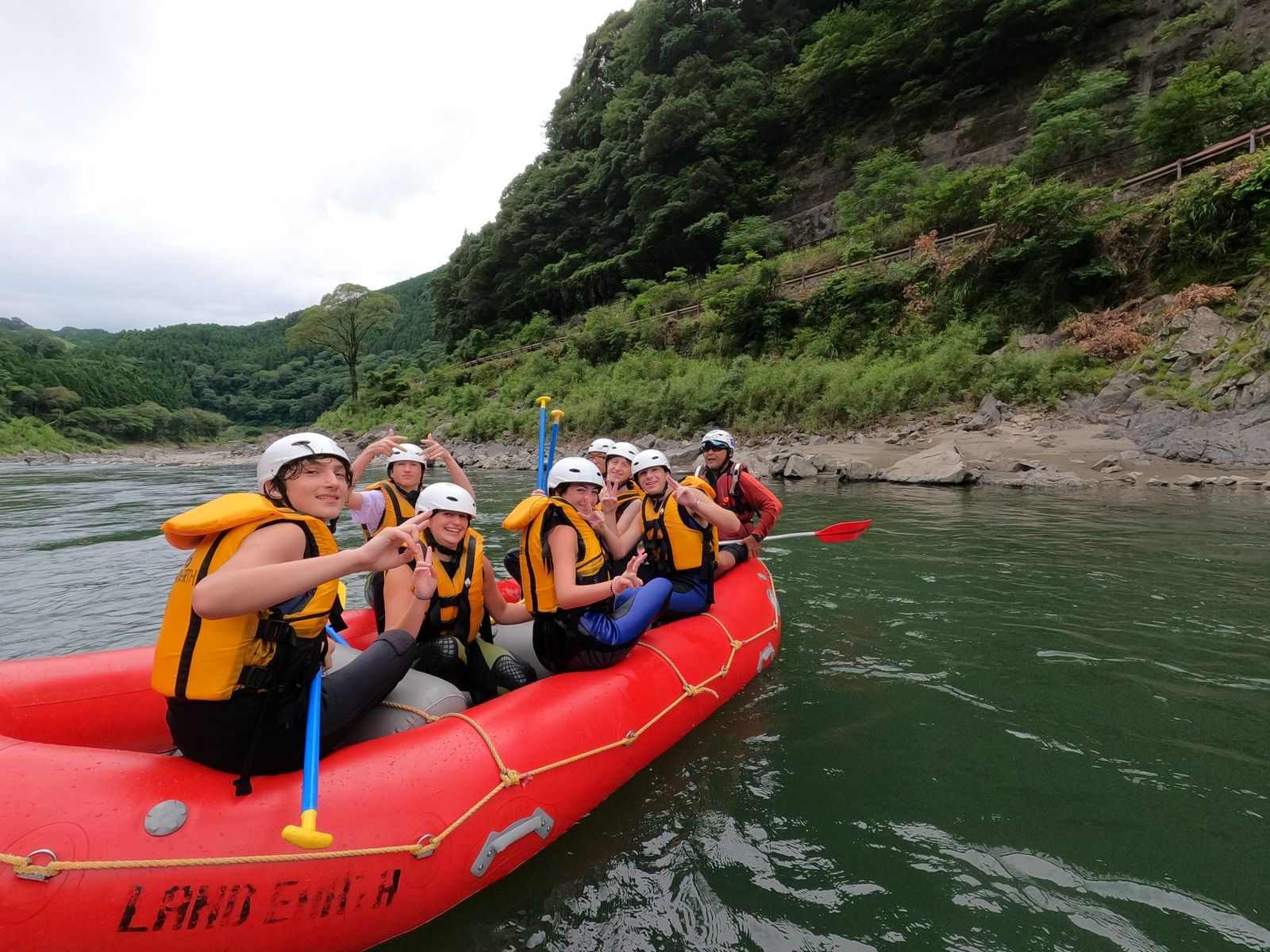
- Days 12–13 Kumamoto — Whitewater rafting on the Kuma River and a visit to the old castle town of Hitoyoshi.
- Day 14 Hiroshima & Miyajima — A guided visit to the Peace Memorial Park and Museum, then the island of Miyajima and the floating torii gate of Itsukushima Shrine.
- Days 15–16 Tokyo — A day at Tokyo DisneySea, the view from the Tokyo Skytree and a farewell banquet.
- Day 17 Tokyo — Goodbyes and the flight home.
Where teens stay
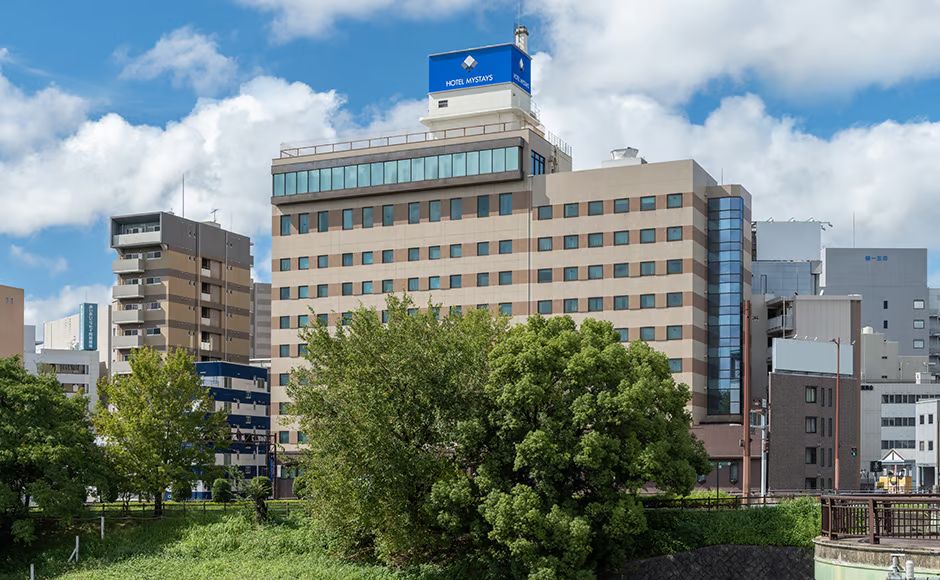
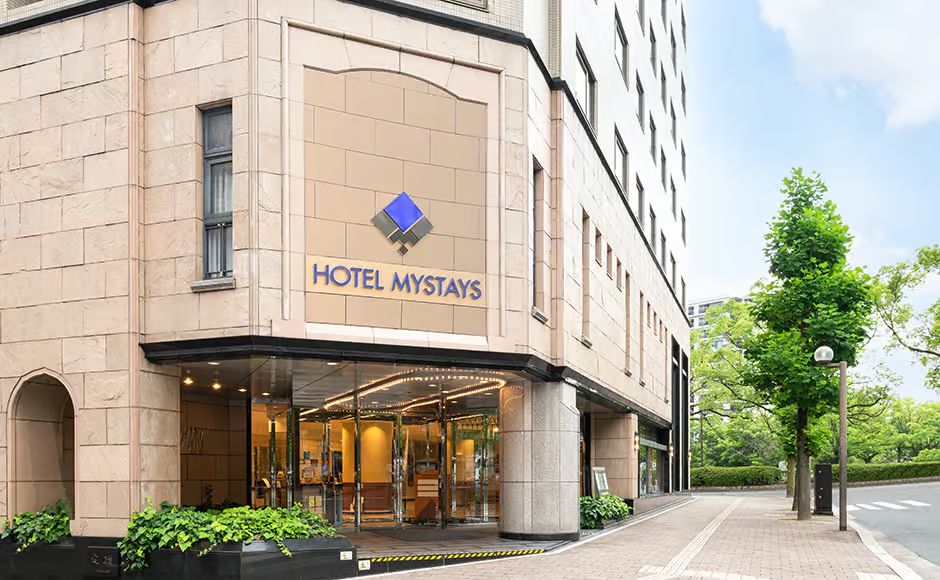
Hotels throughout, in rooms shared with other teens in the group: a central hotel in Tokyo's Toyosu district, a modern hotel set among Kyoto's traditional streets, a riverside hotel in Kumamoto and a hotel by the Peace Park in Hiroshima.


Meals
Breakfast and dinner are included every day, often at local restaurants — sushi, ramen, okonomiyaki, yakiniku and plenty of noodles. Lunch is not included, so plan for it in spending money. Japan is a hard place for some diets: the operator cannot accommodate coeliac disease, a strict gluten-free or vegan diet, or an anaphylactic allergy to fish, sesame or soy (see the FAQ). Tap water is safe to drink.
More photos
Frequently asked questions
Which departure is right for my child?
Groups are put together by US school grade, so each departure has teens of a similar age. Grades 9–11 (roughly ages 14–17): Jun 27–Jul 13, Jul 1–17. The grade is the one your child is in during the 2026–27 school year — we'll help you match it to your school system. Dates are the operator's official start and end dates.
How do flights work on this trip?
On this trip the operator books all the flights, and the airfare is charged on top of the tuition. Normally the whole group flies out together on a chaperoned flight from New York or Los Angeles to Tokyo, with the leaders on board from check-in. For teens coming from Europe the operator agrees the flight plan case by case — for example connecting to the group flight in the US, or meeting the group on arrival — so please talk to us before you book anything; we'll get the options and the airfare quoted for your child. Crossing the International Date Line means the group 'loses' a day on the way out — day 1 is the travel day. At the end the operator offers a chaperoned flight back to New York or Los Angeles from Tokyo; leaders help with check-in and stay at the airport until flights in the set window have left. Whether teens arriving on their own can come a night early with the extra hotel night included isn't stated for this trip — we'll confirm it with the operator for your dates.
What exactly is included in the price?
Hotels, breakfast and dinner every day, all the activities in the itinerary, the local guide, transport within Japan (coach, metro, bullet train and ferry), airport transfers for flights within the set time windows, tips and local taxes. Not included: the flights to and from Japan (booked through the operator and charged on top), lunches and snacks, spending money, laundry (a laundromat stop about once a week — the operator supplies the detergent), the operator's application fee, and travel insurance — optional, but we strongly recommend it.
Is there a discount for enrolling early?
Yes — at the moment the operator takes US$300 off the tuition for early enrolment, so the 17-day trip costs US$7,899 instead of US$8,199 (flights are charged on top either way). It's a limited-time offer and the operator can end it at any point, so ask us whether it still applies before you decide. The price shown on this page is the full tuition.
Can the trip cater for my child's diet or allergies?
Most preferences, yes — but Japan has real limits. The operator cannot take teens with coeliac disease or who follow a strictly gluten-free or vegan diet, or teens with an anaphylactic allergy to fish, sesame or soy, because these ingredients are everywhere and cross-contamination is likely. Even with a milder allergy to them, the operator strongly advises against Japan and may ask for a doctor's note. Picky eaters should know there are few Western-style options. Tell us about any diet or allergy before you enrol and we'll check it with the operator.
Can my child bring their medication to Japan?
Usually yes: up to a one-month supply of most medicines can be brought in without paperwork, in the original packaging, in hand luggage, with a doctor's note. Medicines containing a stimulant or narcotic need a permit from Japan's narcotics authority before arrival, whatever the quantity — the operator helps families apply. Adderall is banned in Japan altogether, so teens who take it need to agree an alternative with their doctor. If your child takes ADHD or other regular medication, tell us early so there's time for the permit.
What is the difference between the 17-day and 26-day versions?
The 17-day trip is the Japan part of the longer trip and ends in Tokyo. The 26-day trip continues to Thailand for nine more days: Bangkok's temples, markets and canals, a ziplining and elephant-care stay in Chiang Mai and a Muay Thai class. On some dates the two groups travel together until day 17.
Does my child need a visa?
Families arrange travel documents themselves. Teens with an EU passport don't need a visa for Japan — EU citizens can visit visa-free for up to 90 days — and no online pre-registration is needed for summer 2027 (Japan's planned JESTA authorisation isn't due before 2028). The passport must be valid for the whole trip. If your child joins the group flight from New York or Los Angeles, they also need an approved ESTA for the US stopover. For any other passport, ask us and we'll check what applies.
Who else will be in the group?
Mostly American teens — on most programs around 85% of participants come from the US, and the operator tries to limit how many teens from any one other country join each group. For an international teen that means a genuinely English-speaking group, which is a big part of the appeal.
How good does my child's English need to be?
At least a confident beginner level — the operator recommends A2 or above, since everything on the trip happens in English. Your child can ask for an English-speaking roommate, and one-to-one English conversation time with a staff member can be arranged daily or a few times a week.
Can my child come on their own?
Yes, and many do. The first days are built around icebreakers and getting-to-know-you activities, roommates are assigned and rotated, and the staff actively help everyone settle into the group.
Are phones allowed?
Yes. Teens can bring their phone, so you can call or message them directly. The operator also runs a communication centre that's staffed every day of the summer, with someone on call around the clock for emergencies.