


Overview
An island-hopping adventure for a small group of up to 24 teens. It starts on Oahu with the hike up Diamond Head crater above Honolulu, a banana-boat ride and a day of paddleboarding, kayaking and canoeing on a private nature reserve in Kaneohe Bay.
On Kauai, the greenest of the islands, the group cruises along the Na Pali coast and snorkels with reef fish, takes surf lessons, ziplines through the jungle and learns the hula. The last six days are on the Big Island around Kona: an evening catamaran trip to snorkel with manta rays, an outrigger canoe, a sunset luau and a day on a black-sand beach.
The leaders drive the group in passenger vans, and the islands are linked by short flights (US$395 on top of the tuition). On some dates the trip runs together with the 10-day version, whose teens fly home after Kauai while the 15-day group continues to Kona.
What's included
The itinerary
- Day 1 Honolulu, Oahu — Arrival in Honolulu and the first icebreakers.
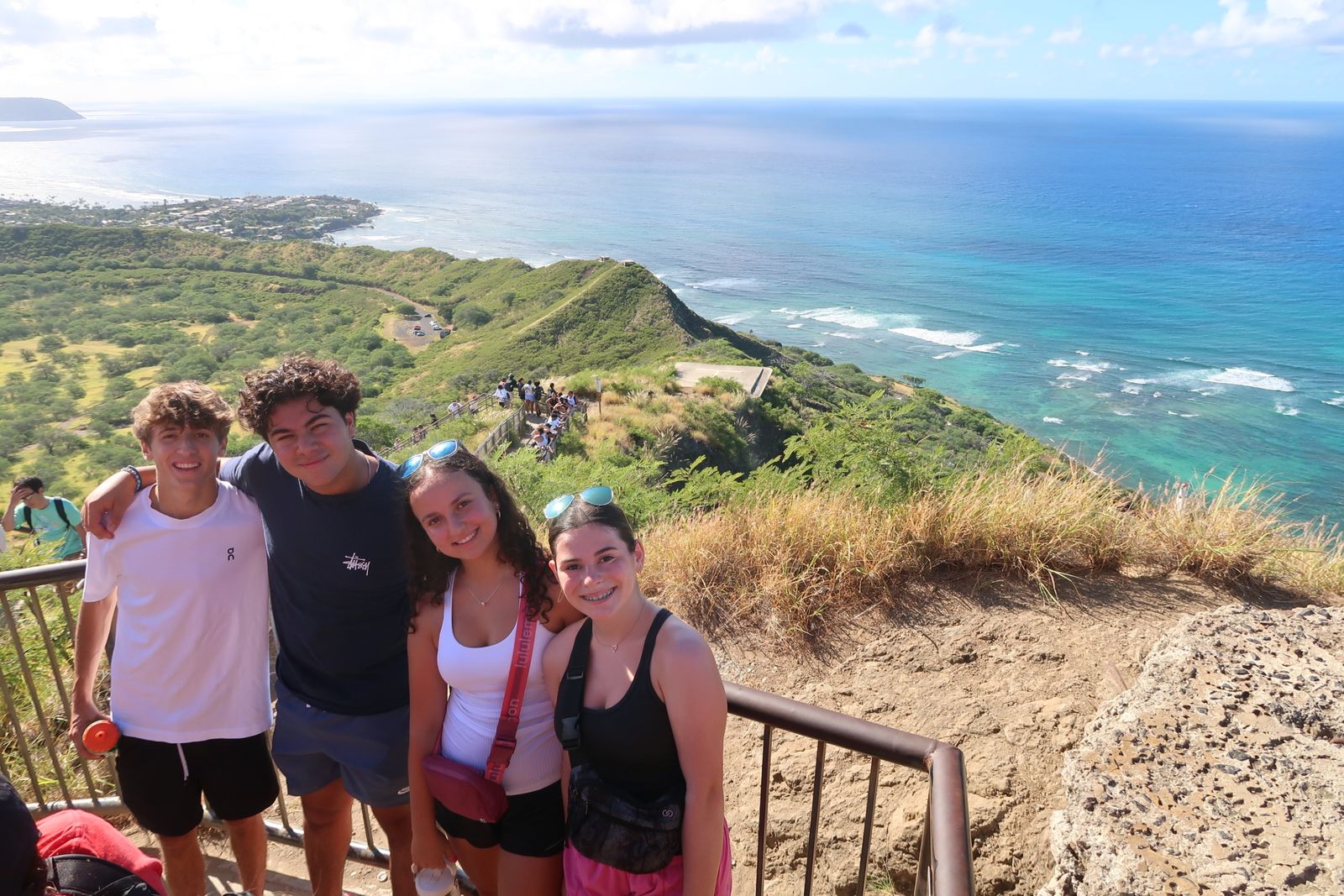
- Days 2–4 Oahu — The hike to the top of Diamond Head crater for views over Honolulu and the Pacific, a banana-boat ride from Koko Marina, a day of paddleboarding, kayaking and canoeing on a private nature reserve in quiet Kaneohe Bay, and time on Waikiki's beaches.
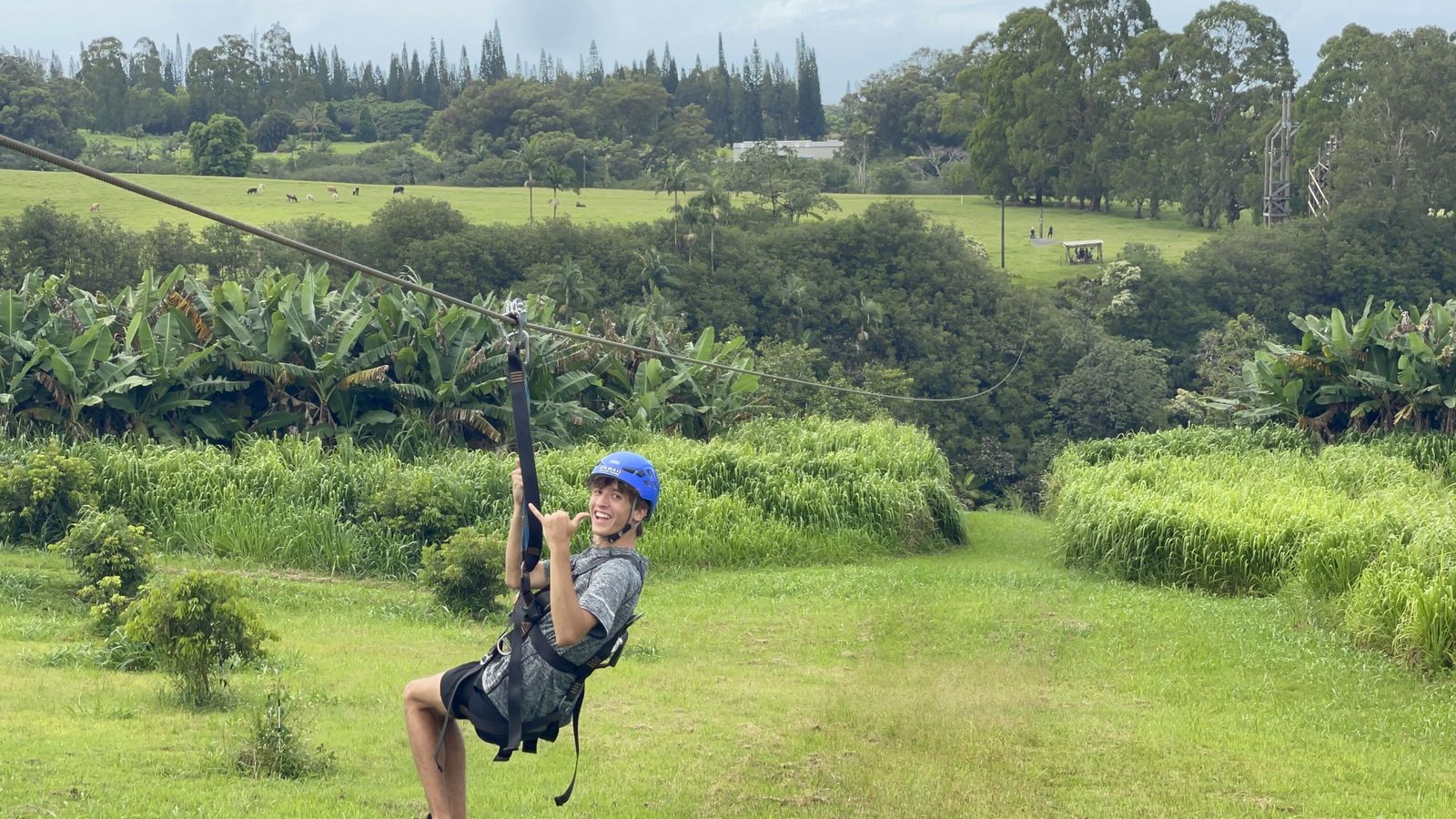
- Days 5–8 Kauai — A short flight to Kauai. A boat cruise along the cliffs of the Na Pali coast with snorkelling among reef fish, surf lessons with professional instructors, a zipline through the jungle and a hula lesson.
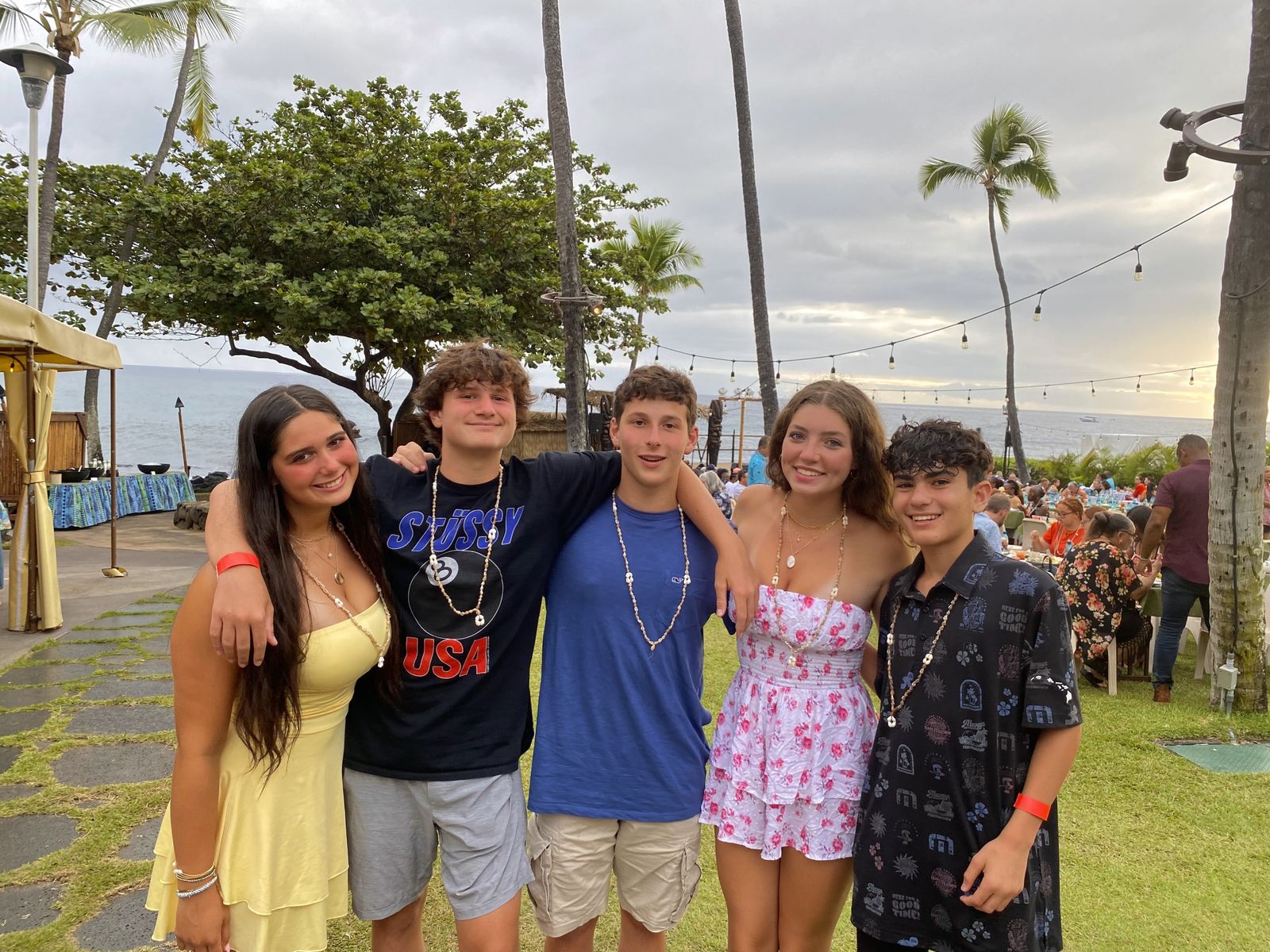
- Days 9–14 Kona, Big Island — A flight to the Big Island. An evening catamaran trip to Manta Ray Village to snorkel alongside giant manta rays, an outrigger canoe on Kona's clear blue water, a luau at sunset and a day on one of the black-sand beaches.
- Day 15 Kona, Big Island — Goodbyes and flights home from Kona.
Where teens stay
Hotels throughout, in rooms shared with other teens in the group: a hotel a short walk from Waikiki beach in Honolulu, with a pool and its own restaurant; a beachfront hotel with a pool and a big courtyard on Kauai; and a resort hotel in Kona, surrounded by gardens, with a pool and views over Kailua Bay. The exact hotel at each stop is confirmed before departure.


Meals
Breakfast (at the hotel or a café) and dinner at restaurants are included every day. Lunch is not included: teens eat in small groups at local cafés and restaurants, so plan for it in their spending money. Vegetarian, kosher-style, gluten-free (coeliac) and lactose-free diets and most allergies can be catered for if you tell us in advance.
More photos
Frequently asked questions
Which departure is right for my child?
Groups are put together by US school grade, so each departure has teens of a similar age. Grades 8–10 (roughly ages 13–16): Jun 27–Jul 11, Jul 1–15, Jul 22–Aug 5. The grade is the one your child is in during the 2026–27 school year — we'll help you match it to your school system. Dates are the operator's official start and end dates.
How do flights and arrival work?
The trip starts in Honolulu and ends in Kona on the Big Island, so you book a flight into Honolulu and a flight home from Kona. Please check the operator's arrival and departure time windows with us before buying anything non-refundable. Staff meet your child at the airport and take them to the group at no extra cost, and teens flying in from overseas can arrive the night before the official start with the extra hotel night included. From Europe, most routes connect through a large US airport, where your child goes through immigration before the onward flight. On the last day the leaders help with check-in and stay at the airport until flights in the set window have left; flights back to Europe are usually overnight, so your child lands home the next day. There are no direct flights from Europe to Hawaii, so teens connect through a mainland US airport (or fly via Asia) — allow for a long travel day. The flights between the islands are booked by the operator and cost US$395 on top of the tuition.
What exactly is included in the price?
Accommodation, breakfast and dinner every day, all the activities in the itinerary, airport transfers for flights within the set time windows, tips and local taxes. Not included: flights to and from the trip, the inter-island flights (US$395), lunches and snacks, spending money, laundry (a laundromat stop about once a week — the operator supplies the detergent and shows first-timers how it works), the operator's application fee, and travel insurance — optional, but we strongly recommend it.
Is there a discount for enrolling early?
Yes — at the moment the operator takes US$300 off the tuition for early enrolment, so the 15-day trip costs US$7,399 instead of US$7,699 (the inter-island flights are charged on top either way). It's a limited-time offer and the operator can end it at any point, so ask us whether it still applies before you decide. The price shown on this page is the full tuition.
What is the difference between the 10-day and 15-day versions?
Both start with Oahu and Kauai. The 10-day trip ends on Kauai; the 15-day trip adds six days on the Big Island around Kona, with the manta-ray night snorkel, an outrigger canoe, a luau and a black-sand beach. On some dates the two groups travel together until day 10.
What does "small-group adventure" mean here?
Groups are capped at 24 teens and the leaders drive them in passenger vans rather than a big coach, which leaves room for flexibility and makes it easier to get to know everyone. If you'd prefer a bigger group with resort hotels, look at the Hawaiian Spirit (20 days) or Hawaii & Alaska (26 days) tours.
Does my child need a visa or an ESTA?
Families arrange travel documents themselves. Teens with a passport from a Visa Waiver country — Czechia and most of the EU included — need an approved ESTA (the online US travel authorisation) before they board, so apply well ahead. Teens from other countries need a B-2 visitor visa, not a student visa. If a teen living outside North America is refused a visa before 1 June, the operator offers a move to another program, a roll-over to the following summer, or a refund minus US$450.
Who else will be in the group?
Mostly American teens — on most programs around 85% of participants come from the US, and the operator tries to limit how many teens from any one other country join each group. For an international teen that means a genuinely English-speaking group, which is a big part of the appeal.
How good does my child's English need to be?
At least a confident beginner level — the operator recommends A2 or above, since everything on the trip happens in English. Your child can ask for an English-speaking roommate, and one-to-one English conversation time with a staff member can be arranged daily or a few times a week.
Can my child come on their own?
Yes, and many do. The first days are built around icebreakers and getting-to-know-you activities, roommates are assigned and rotated, and the staff actively help everyone settle into the group.
Are phones allowed?
Yes. Teens can bring their phone, so you can call or message them directly. The operator also runs a communication centre that's staffed every day of the summer, with someone on call around the clock for emergencies.