


Overview
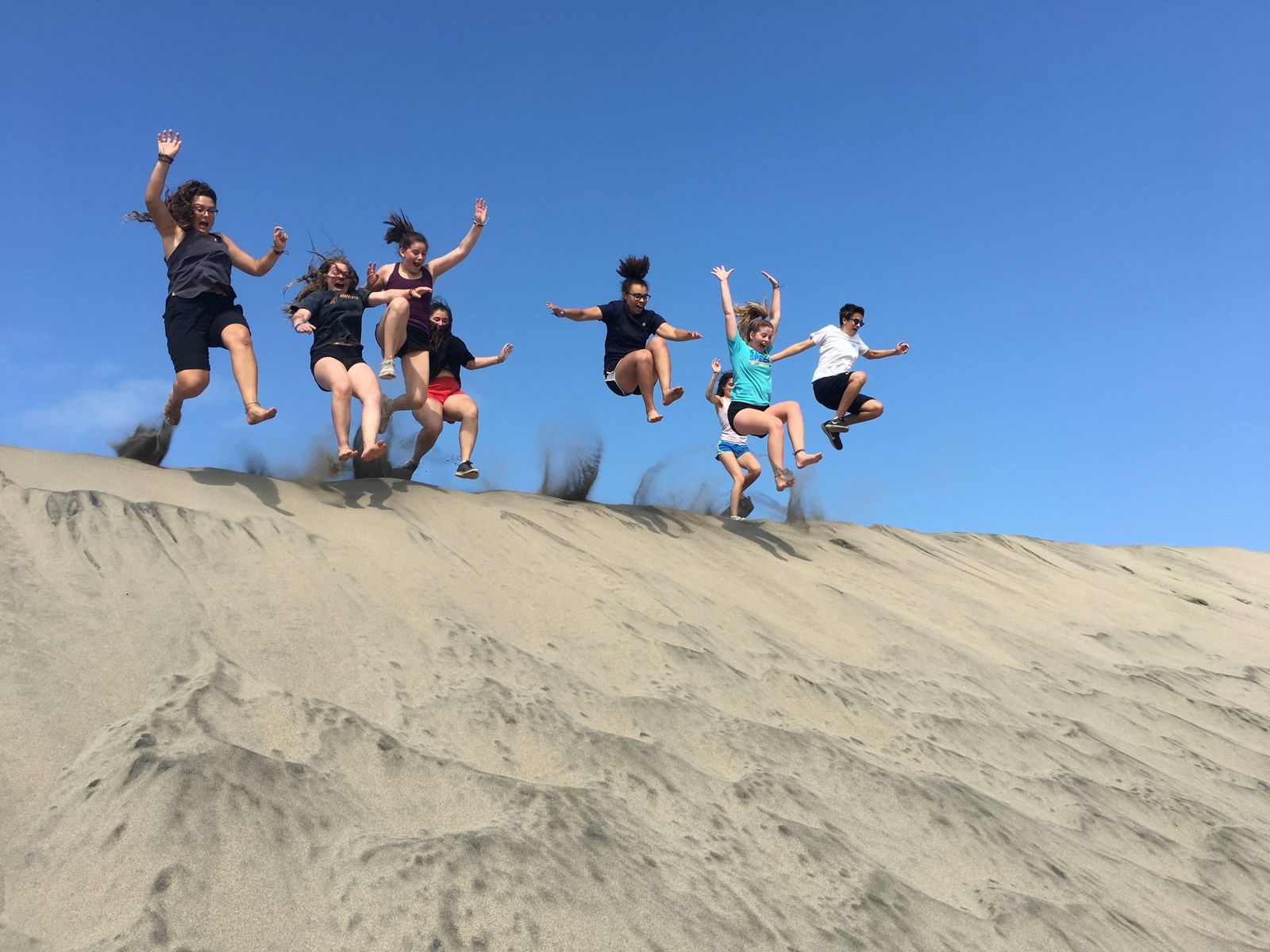
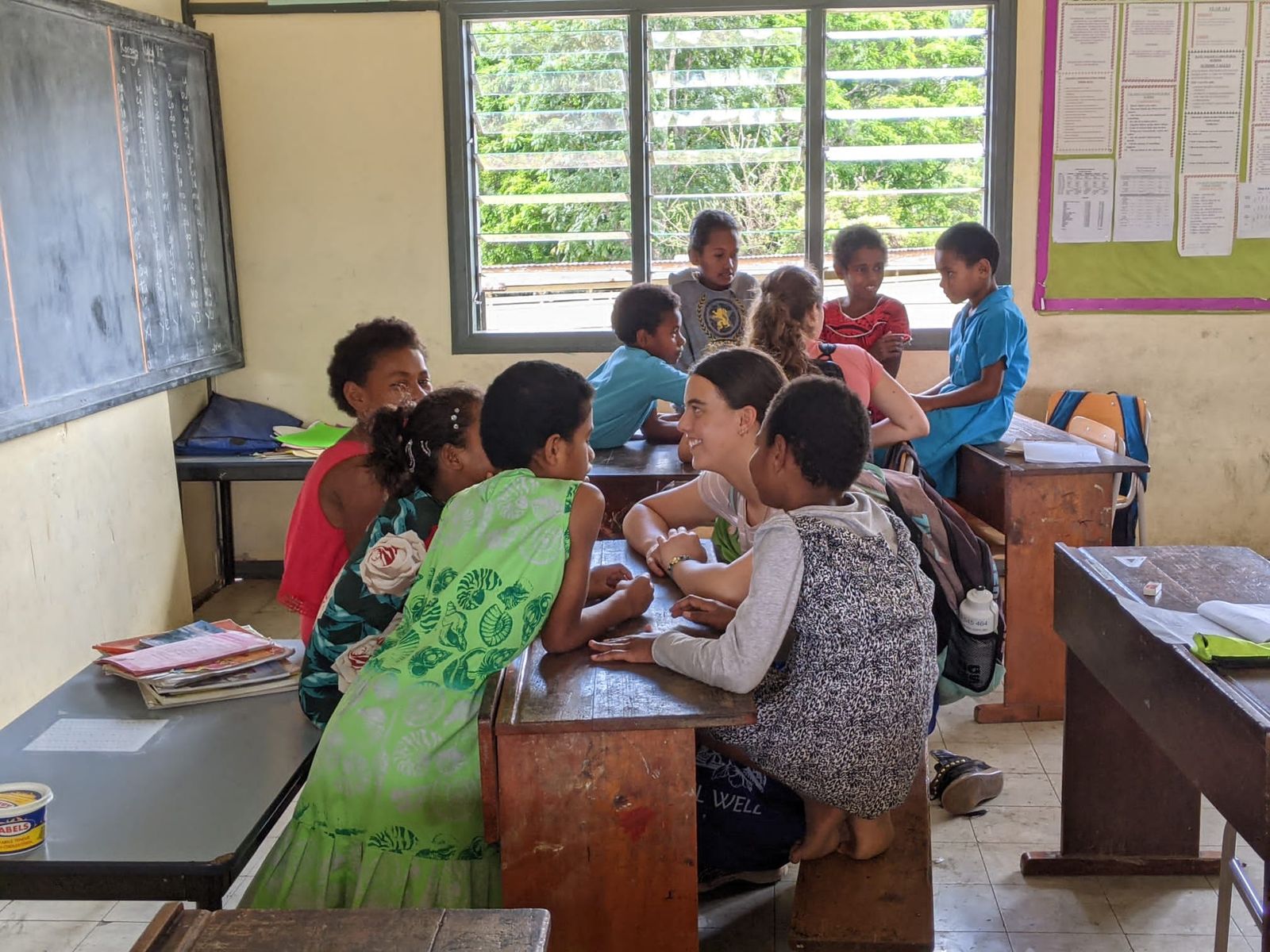
The full Fiji service program plus a Hawaiian finale, for up to 24 teens. From the Momi Bay eco-lodge the group helps skilled builders bring water to village homes, runs a Kids' Club, makes crafts with village women, works on a pineapple farm and plants native trees at the Sigatoka Sand Dunes; then four days in beach tents on Barefoot Manta Island bring reef and mangrove work with a marine biologist and snorkelling with manta rays. That's about 45 hours of service, with a letter of completion afterwards.
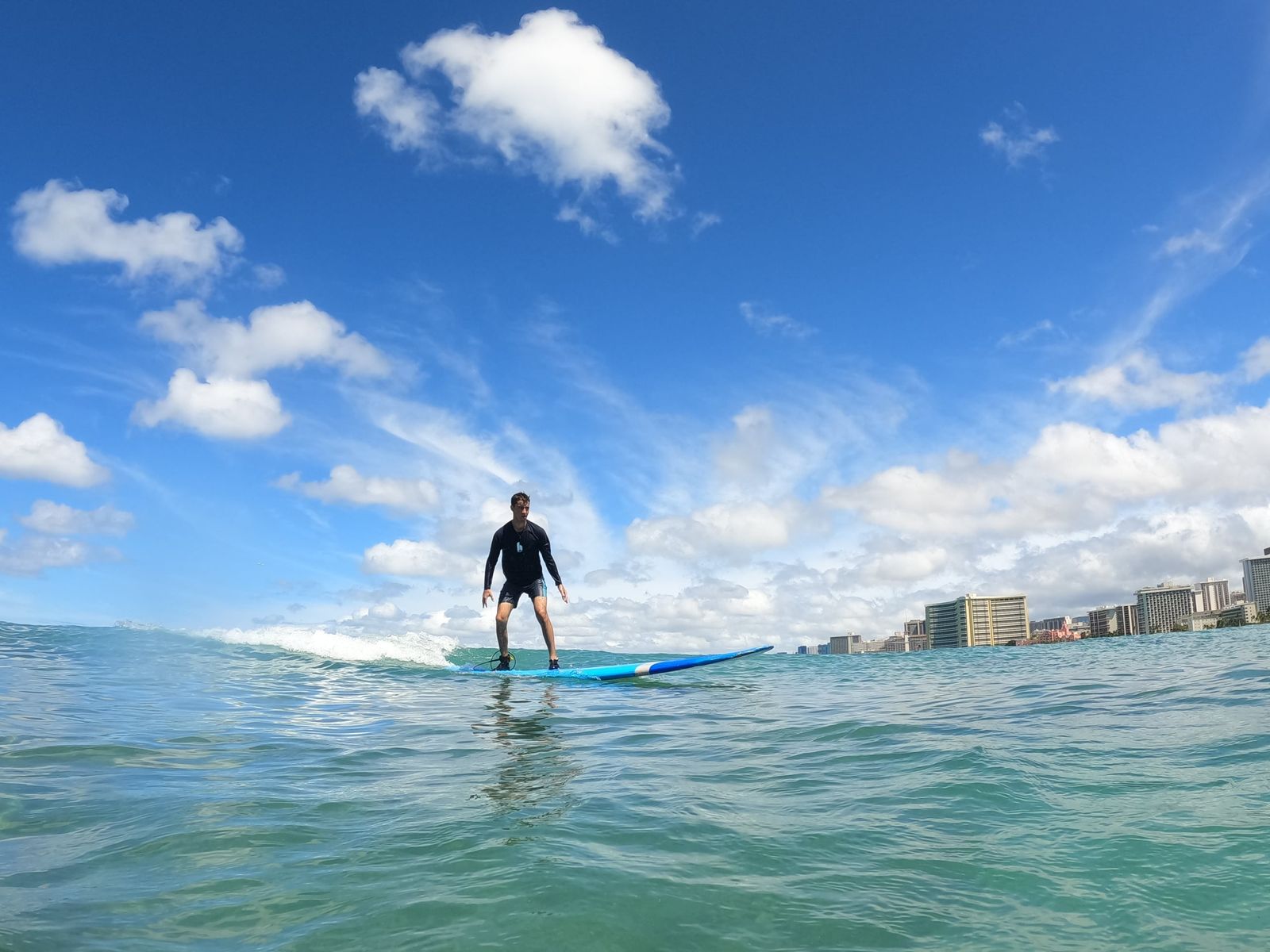
After a farewell kava ceremony in Nadi, the group flies to Honolulu for four nights near Waikiki: the Dole Plantation, the hike up Diamond Head, surf lessons with professional instructors at Waikiki Beach and a luau on the last night.
On this trip the operator books the flights (Fiji–Honolulu costs US$785 on top of the tuition) — see the flights FAQ. A professional local guide accompanies the group in Fiji. A limited number of teens leave after day 18.
What's included
The itinerary
- Days 1–2 Flight to Fiji — A chaperoned overnight flight from Los Angeles to Nadi; crossing the date line costs a day on the way out (it comes back on the way home).
- Stop Momi Bay (main island) — A sulu (traditional Fijian dress) and a formal sevusevu welcome ceremony. Service with local villages: a water project with skilled builders, craft workshops with the women of Nabila village, a Kids' Club for an after-school program, work on a pineapple farm and native-tree planting with rangers at the Sigatoka Sand Dunes. Plus a dunes hike and Fiji's biggest zipline.
- Stop Barefoot Manta & Naviti, Yasawa Islands — Four days of island life after a high-speed catamaran ride: reef and mangrove work with a marine biologist, a welcome ceremony and farm work in Somosomo village on Naviti, snorkelling with manta rays and beach time.
- Stop Nadi — Mud baths, a farewell kava ceremony and a local market.
- Finale Honolulu, Hawaii — A flight to Honolulu and four nights near Waikiki Beach: the Dole Plantation and a Dole Whip, the hike up Diamond Head, surf lessons at Waikiki and a farewell luau.
- Day 24 Honolulu — Goodbyes and the flight home from Honolulu.
Where teens stay
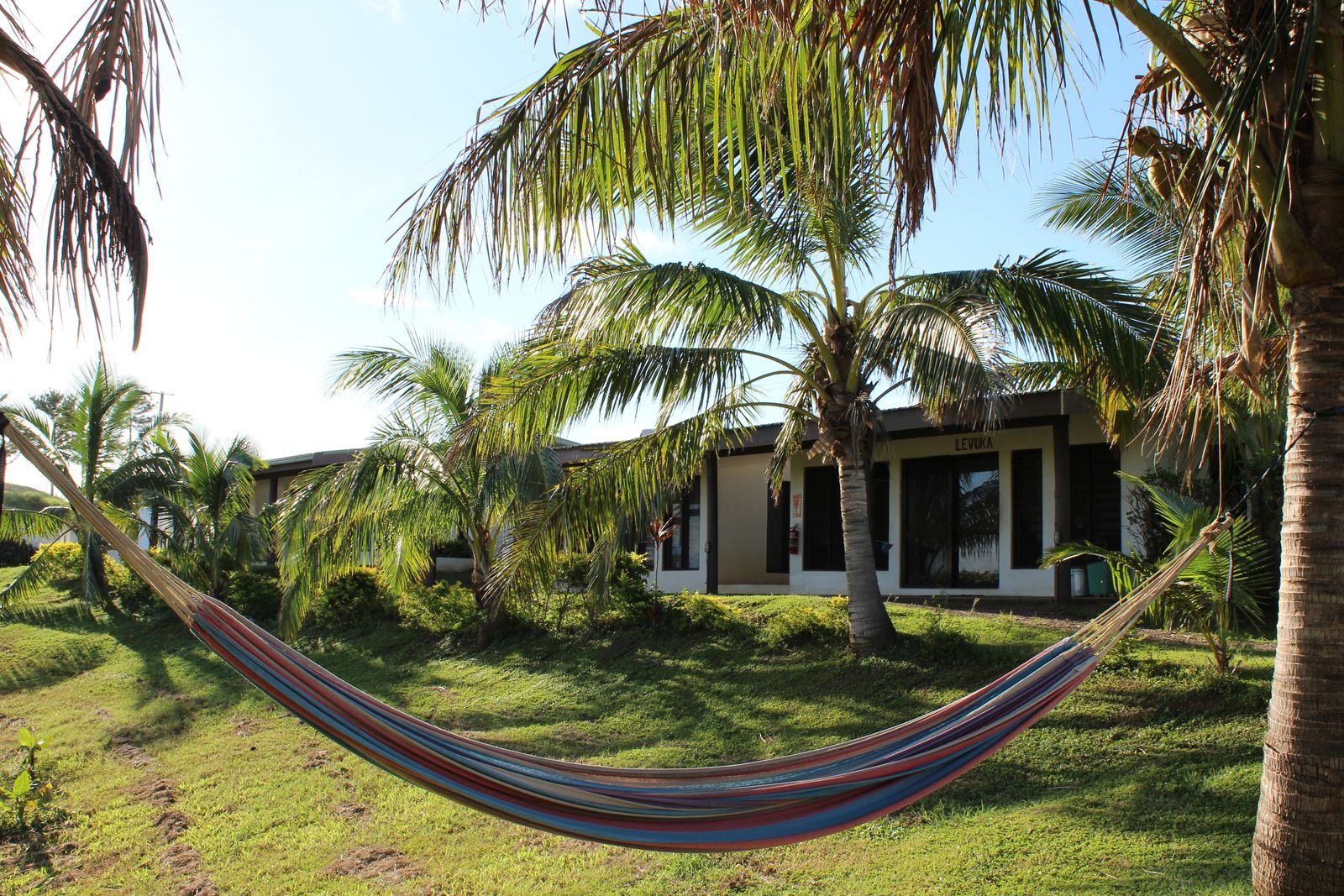
In Fiji: the Momi Bay eco-lodge (simple Fijian cabins with modern shared bathrooms, a pool and sports fields), permanent tents with bunk beds on Barefoot Manta Island (shared facilities, solar power) and a resort with a pool in Nadi. In Hawaii: a hotel with a pool within walking distance of Waikiki Beach. Rooms are shared with other teens.

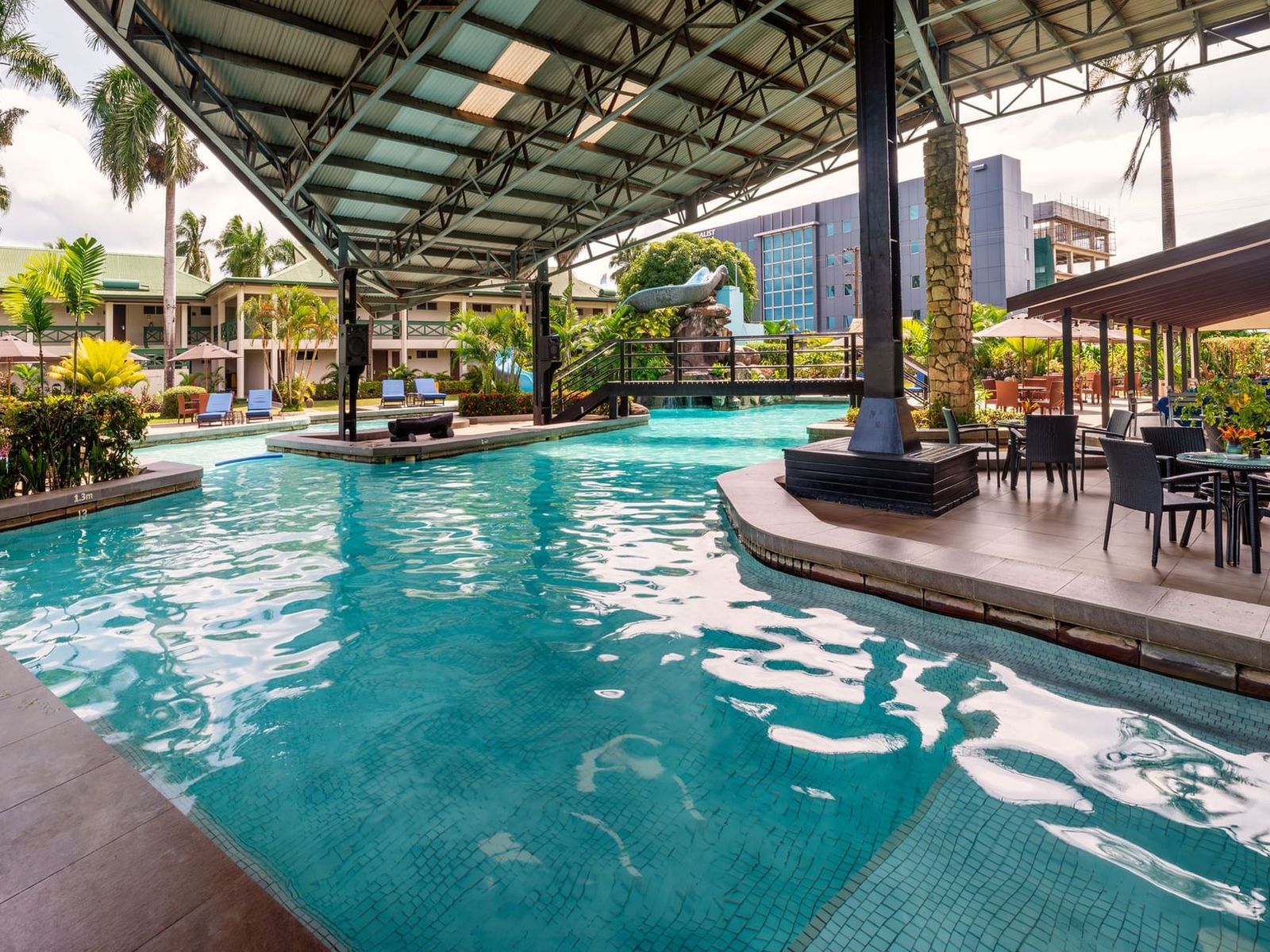
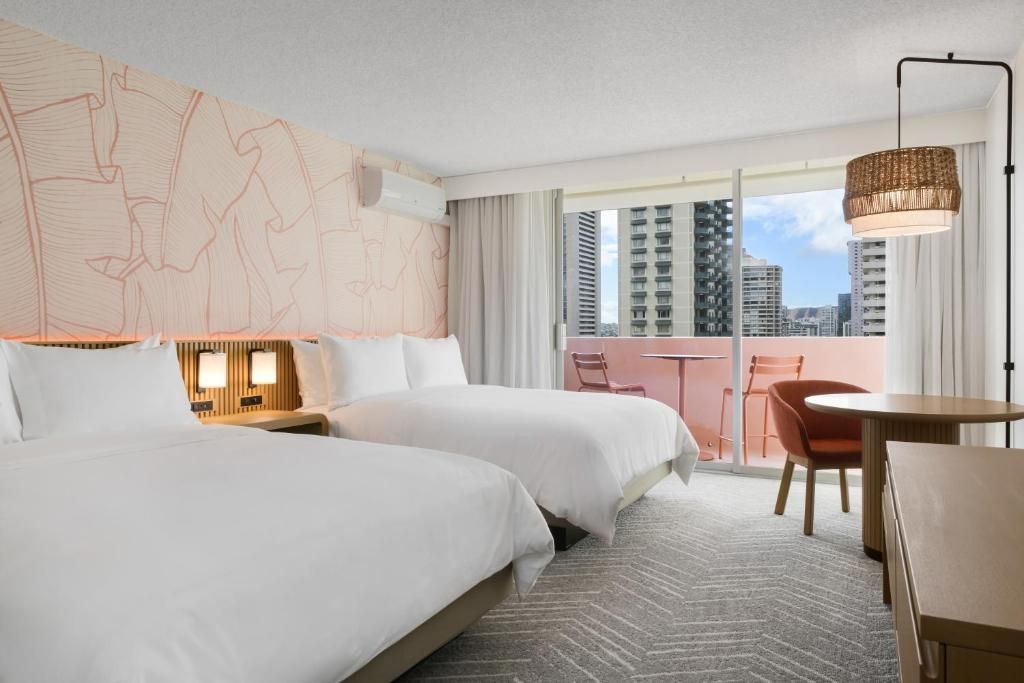
Meals
Breakfast and dinner are included every day, plus 16 lunches in Fiji — a mix of restaurants, buffets and meals the group prepares together. Lunches in Hawaii are not included. Vegetarian, kosher-style, gluten-free (coeliac) and lactose-free diets and most allergies can be catered for if you tell us in advance.
More photos
Frequently asked questions
Which departure is right for my child?
Groups are put together by US school grade, so each departure has teens of a similar age. Grades 9–11 (roughly ages 14–17): Jun 30–Jul 23. The grade is the one your child is in during the 2026–27 school year — we'll help you match it to your school system. Dates are the operator's official start and end dates.
What does the volunteering actually involve?
About 45 hours of hands-on work done together as one group, with a letter of completion listing the hours and projects afterwards. Around the mainland base at Momi Bay: an ongoing project to bring water to homes in Bavu village alongside skilled tradespeople (digging, block-laying, painting, carpentry), craft workshops with village women whose crafts are then sold for the village, designing and running a Kids' Club for a local after-school program, weeding, planting and harvesting on a pineapple farm, and planting native trees with rangers at the Sigatoka Sand Dunes. Teens also help cook Fijian dishes for a local women's shelter. In the Yasawa Islands they join a marine biologist for tasks such as mangrove and coral planting, reef surveys, fish counts, removing invasive species and beach clean-ups, and help on the community farm in Somosomo village. Exact projects are confirmed in late spring and are similar to these.
What is the island stay like?
Simple, and for most teens the highlight. On Barefoot Manta the group sleeps in permanent tents with bunk beds a few steps from the beach, with shared bathrooms and solar-powered electricity — think glamping rather than a hotel. It suits teens who are happy to unplug for four days.
How do flights work on this trip?
On this trip the operator books all the flights, and the airfare is charged on top of the tuition. Normally the group flies together on a chaperoned flight from Los Angeles to Nadi (with a connecting chaperoned flight from New York). For teens coming from Europe the operator agrees the flight plan case by case — for example meeting the leaders at Los Angeles airport, or joining the group in Fiji — so please talk to us before you book anything; we'll get the options and the airfare quoted for your child. The flight from Fiji to Honolulu costs US$785 on top. At the end your child flies home from Honolulu; the leaders help with check-in and stay at the airport until flights in the set window have left. There are no direct flights from Hawaii to Europe, so allow for a long journey home via the US mainland. Whether teens arriving on their own can come a night early with the extra hotel night included isn't stated for the Fiji start — we'll confirm it with the operator.
What exactly is included in the price?
Accommodation, breakfast and dinner every day plus 16 lunches in Fiji, the service projects and all the activities listed, the local guide in Fiji, coach and ferry transport, airport transfers for flights within the set time windows, tips and local taxes. Not included: the flights to Nadi and home from Honolulu and the Fiji–Honolulu flight (US$785), booked through the operator, lunches in Hawaii, snacks, spending money, laundry, the operator's application fee, and travel insurance — optional, but we strongly recommend it.
Is there a discount for enrolling early?
Yes — at the moment the operator takes US$300 off the tuition for early enrolment, so the 24-day trip costs US$8,299 instead of US$8,599 (flights are charged on top either way). It's a limited-time offer and the operator can end it at any point, so ask us whether it still applies before you decide. The price shown on this page is the full tuition.
What is the difference between the 18-day and 24-day versions?
The service and adventure in Fiji are the same. The 24-day trip adds four nights in Honolulu with surfing, Diamond Head and a luau instead of flying home from Nadi.
Does my child need a visa or an ESTA?
Families arrange travel documents themselves. Teens with an EU passport get a free visitor permit on arrival in Fiji; the passport should be valid for at least six months after the trip. Hawaii is part of the USA: teens with a passport from most EU countries need an approved ESTA (the online US travel authorisation) before they board, even for a US stopover — apply well ahead. If a teen living outside North America is refused a visa before 1 June, the operator offers a move to another program, a roll-over to the following summer, or a refund minus US$450. For any other passport, ask us and we'll check what applies.
Who else will be in the group?
Mostly American teens — on most programs around 85% of participants come from the US, and the operator tries to limit how many teens from any one other country join each group. For an international teen that means a genuinely English-speaking group, which is a big part of the appeal.
How good does my child's English need to be?
At least a confident beginner level — the operator recommends A2 or above, since everything on the trip happens in English. Your child can ask for an English-speaking roommate, and one-to-one English conversation time with a staff member can be arranged daily or a few times a week.
Can my child come on their own?
Yes, and many do. The first days are built around icebreakers and getting-to-know-you activities, roommates are assigned and rotated, and the staff actively help everyone settle into the group.
Are phones allowed?
Yes. Teens can bring their phone, so you can call or message them directly. The operator also runs a communication centre that's staffed every day of the summer, with someone on call around the clock for emergencies.